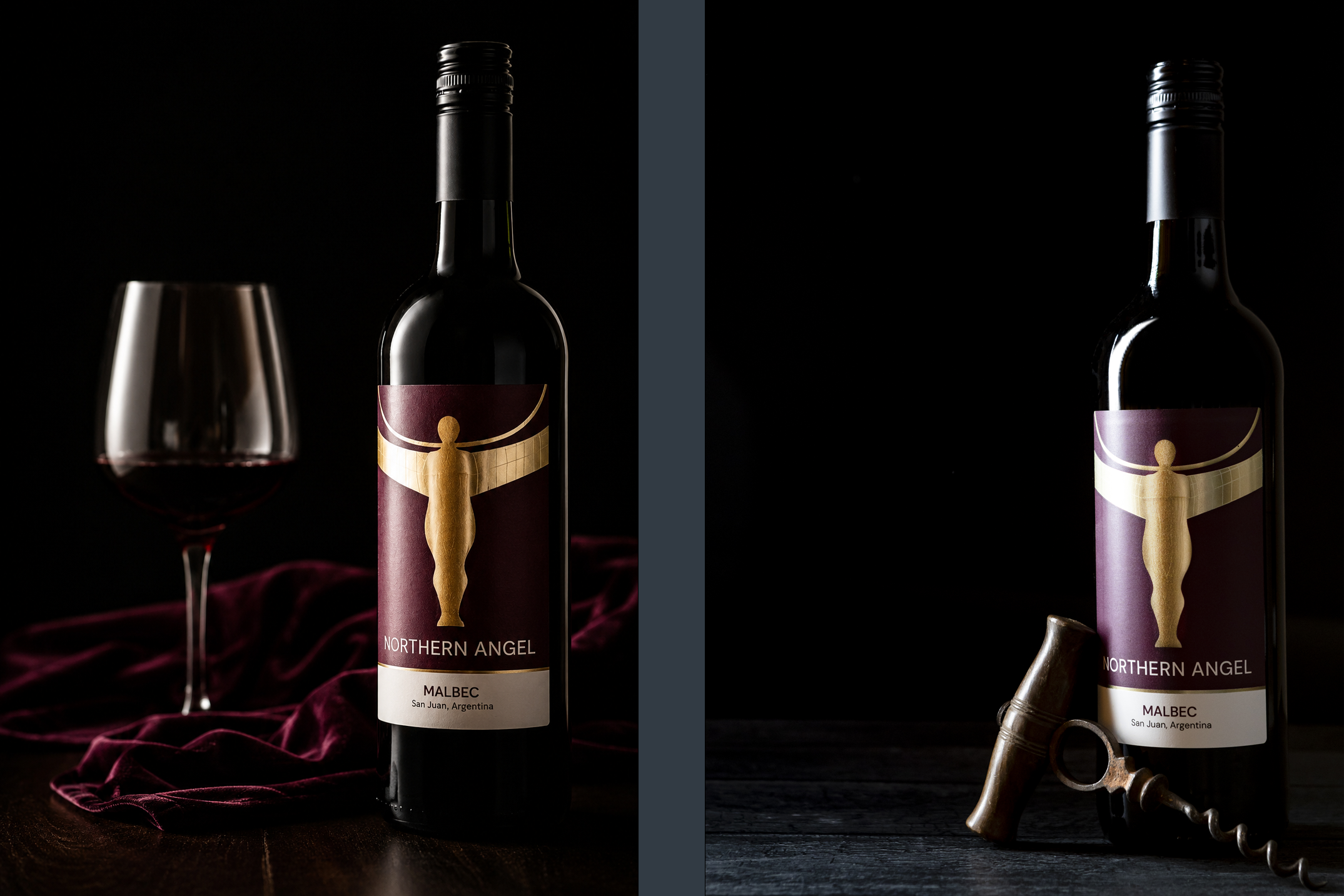
I asked AI to recreate my image of the Northern Angel Malbec (R) and antique corkscrew. It “recreated” the image (L) by changing the colour and texture of the label, and adding a wine glass and some fabric.
Can AI Replace Product Photography? What Your Business Needs to Know
Why authentic product imagery, customer trust, and professional creative direction still matter when selling online.
Can AI replace professional product photography?
Technically, yes. AI can generate remarkably convincing images, change backgrounds and produce attractive visuals without a traditional photography shoot. But there's a fundamental difference between creating an image that looks good and creating an image that accurately represents a product someone is about to spend their money on.
And that's where things become more complicated.
AI doesn't photograph your product. It generates an interpretation of it.
It can misunderstand shapes, alter proportions, invent details, change colours, misrepresent textures and produce objects that don't physically exist. These aren't simply aesthetic imperfections, they're potential problems for businesses selling real products to real customers. It’s easy to look at the side-by-side comparison of the AI image versus my own above, and think they’re not all that different; but they are not the same picture. The red of the AI bottle label is completely incorrect, and details matter. A trained eye can easily spot that the scale of the glass compared to the bottle is wrong, and that the lighting is off, indicating that it is AI. Moreover, ChatGPT didn't recreate my photograph; it generated a different image, with details I hadn't asked it to change.
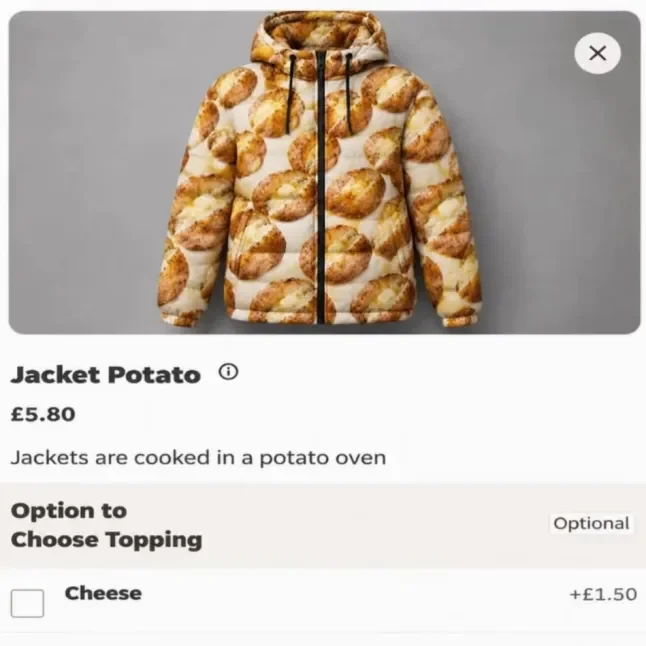
We've even seen some public examples. In October 2026, Just Eat had to apologise and pause its trial of AI-generated menu imagery after the technology produced some bizarre interpretations of dishes being offered by restaurants on their site. A jacket potato became a jacket with a potato design on it and, while nobody is going to get caught out by that particular image, other dishes were represented in ways that made them look uninspiring and unappetising enough to cause customers to walk away.
Do customers trust AI-generated product images?
Of course, not every AI image is obviously wrong. Some are extraordinarily convincing at first glance. But consumers are becoming increasingly familiar with generative AI, and the distinction between an attractive image and an authentic one matters.
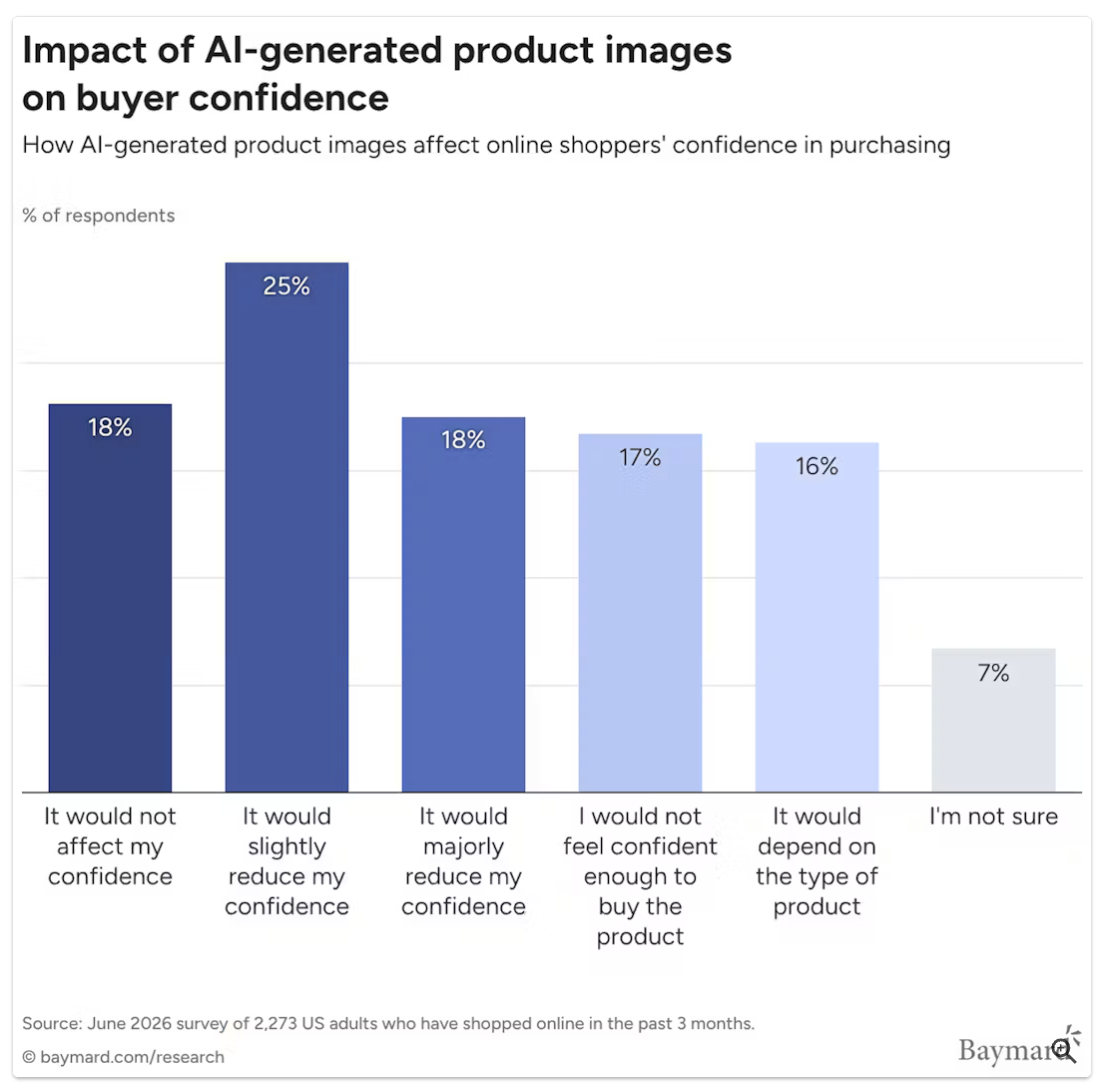
A 2026 study by e-commerce research organisation Baymard found that 60% of online shoppers said knowing a product image was AI-generated would negatively impact their purchasing confidence. More significantly, 17% said they would not feel confident enough to buy the product at all.
VML's Future Shopper 2026 research, involving 28,000 consumers across 17 countries, also found that 49% of shoppers lose trust in a brand when its product imagery looks AI-generated.
The problem isn't necessarily that customers dislike technology. It's that they want to know what they're buying. They want to see the actual colour, finish, proportions, packaging, and details of the product that will arrive at their door.
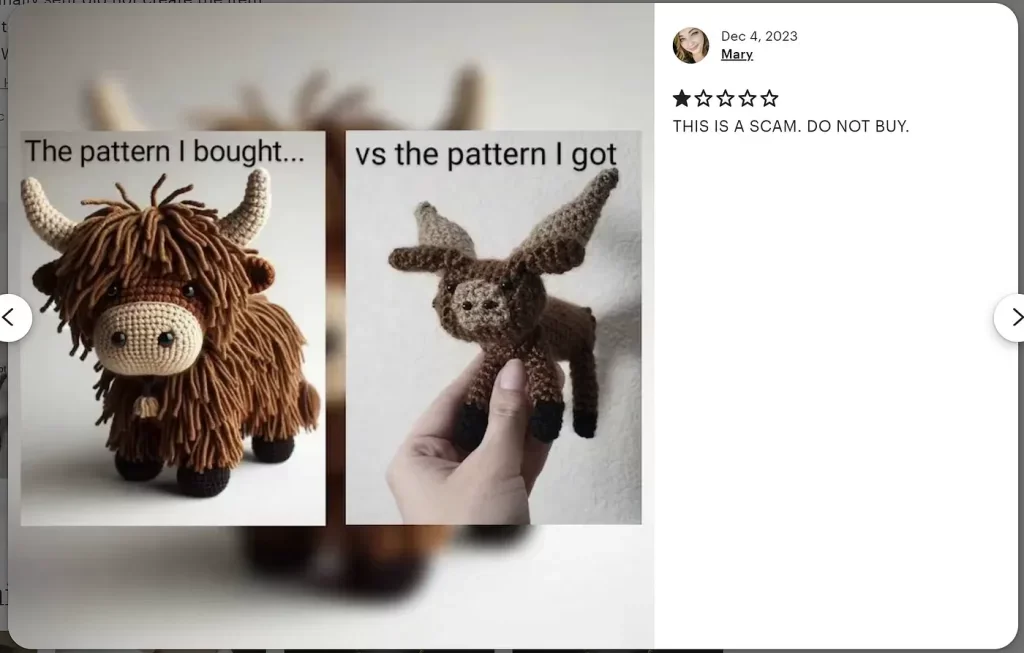
AI scams are so prevalent that whole social media accounts are dedicated to highlighting the gulf between what was promised via AI imagery, and what actually arrived. An AI image doesn’t automatically indicate a scam, but there are enough of them around that buyers are becoming increasingly cautious when faced with generative AI marketing.
It’s difficult to convince consumers that your handmade, ethical, home-based business is any of those things when the accompanying image was generated by an LLM.
There is also a growing backlash against brands using generative AI in place of genuine creative work. The Cut Design Academy's reporting on consumer reactions to AI imagery in fashion highlights the criticism directed at major brands including Gucci and Valentino. The concern is not just whether an image looks convincing, but whether the brand is being authentic about how it represents itself and its products.
This is particularly important for independent businesses and premium brands alike. Your product photography is often the first physical impression a potential customer has of your business. It communicates quality, attention to detail and the standards behind your brand. If the imagery looks artificial, misrepresents the product, or leaves customers questioning its authenticity, you risk undermining the very confidence you're trying to build.
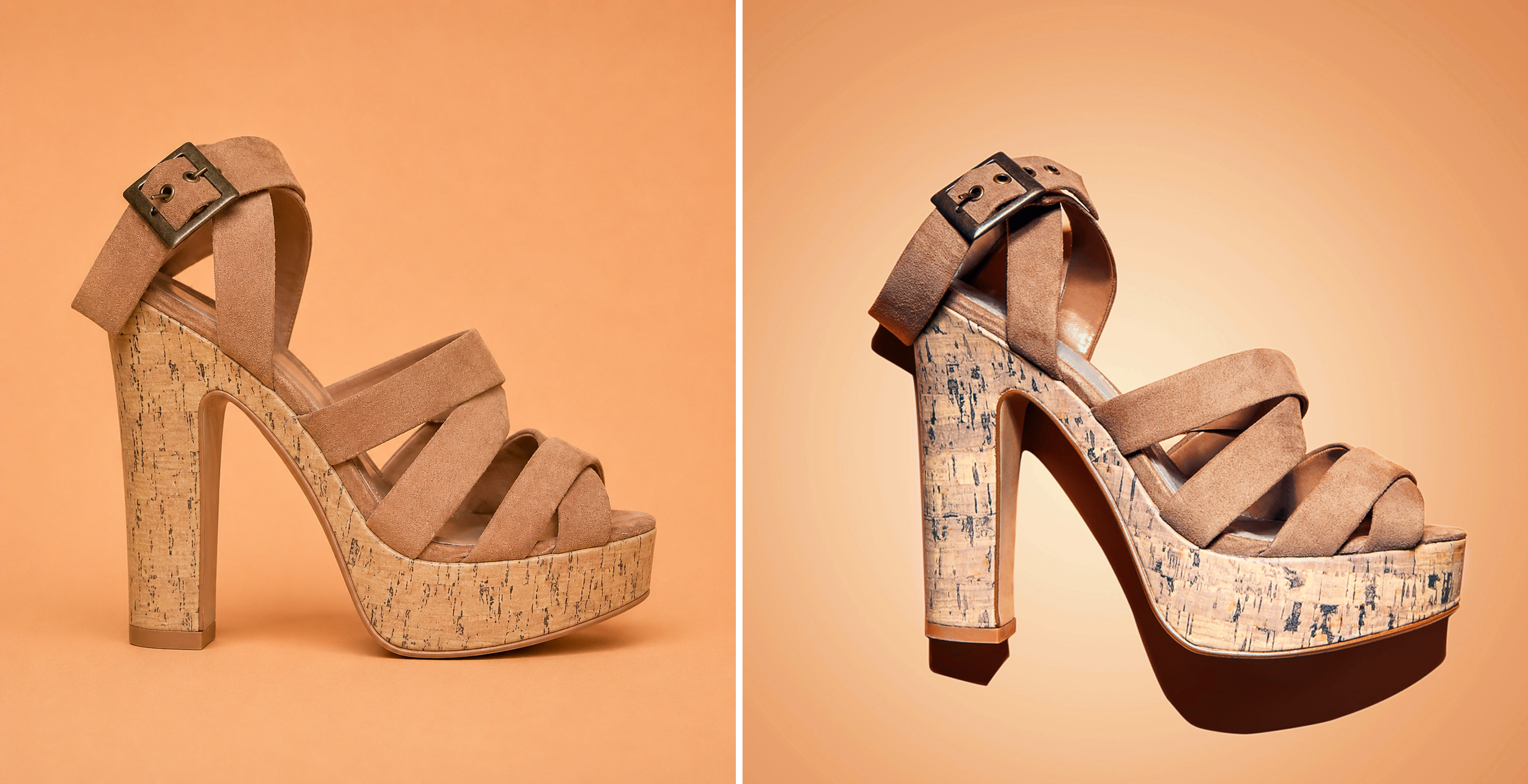
I asked AI to recreate my image (R) of a high heel shoe. At first glance, you can see that it changed the lighting from dramatic to something quite flat. When you look closer you can see that the straps are thicker on the AI version, and the buckle is also a different shape. The buckle would not work in reality and that the colours don’t match.
Is AI product photography cheaper than hiring a photographer?
At first glance, hiring a professional photographer for your products may seem expensive. E-commerce/packshot photography (your product set against a plain or transparent background) can cost anywhere from £10-50 per image, and a creative day rate can rise into the thousands depending on the product and the deliverables in question.
So, let’s break it down with some example figures.
A business selling a £30 product might consider £1,000 a significant photography investment. But if its profit margin is £15 per sale, it needs just 67 additional sales to recover that investment.
Now consider the other side of the equation.
VML's 2026 research found that 49% of consumers lose trust when product imagery looks AI-generated, while 48% skip content they suspect is synthetic. We cannot translate those figures directly into lost sales, but they demonstrate a genuine commercial risk.
If a hypothetical business receives 10,000 product-page visits, a reduction of just one percentage point in conversion means 100 fewer sales. That's £3,000 in lost turnover on a £30 product.
At a £15 contribution per sale, that's £1,500 in lost contribution.
Suddenly, the £1,000 photography investment looks rather different.
Professional photography isn't simply another business expense. It's an investment in how customers perceive your products, how much they trust your brand and how confidently they make purchasing decisions.
Besides, a £1,000 day rate buys a suite of images, not just one hero product photograph. Those images can be used across websites, social media, advertising, catalogues, email campaigns, and PR.
That means the investment can support sales across several channels and potentially over several years.
The real comparison isn't £1,000 for photographs versus free AI images. It's the cost of producing authentic, reusable commercial assets versus the potential cost of undermining customer confidence.
Why is professional product photography still important for businesses?
AI has its uses, and is clearly here to stay. But there's a difference between using AI to support administrative elements of your business, and relying on it to invent the very thing you're trying to sell.
When advertising your product, you want your product to stand out from the crowd. You want it to shine. You want it to look original. And that’s where AI really falls down. Generative AI has been trained on vast quantities of existing creative work, much of it produced by artists and photographers who have neither given permission nor received remuneration for its use. It can combine, imitate and reinterpret visual styles, but that isn't the same as having an original creative vision.
AI can produce an image that looks polished, but polished isn't the same as distinctive. When everyone has access to the same tools, trained on the same existing imagery, there's a risk of producing work that is homogenous and unoriginal.
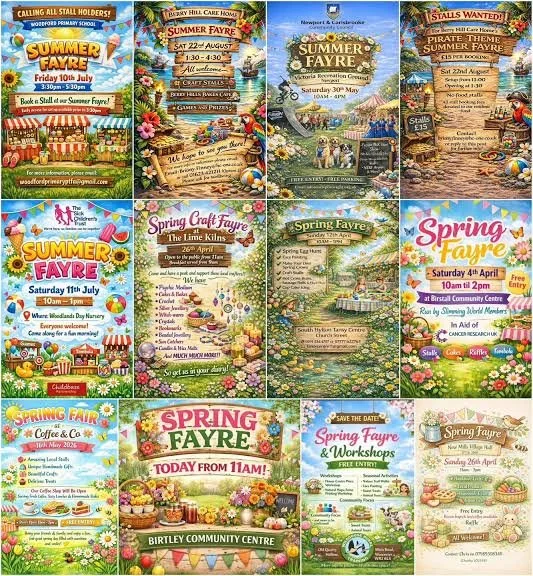
AI flyers all look very much the same. Different people, different prompts, same results.
Your customers aren't buying an AI-generated image. They're buying your product. Make sure you show them the real thing.
